Cheapest Storage Solutions for Small Bathrooms

Cheapest Storage Solutions for Small Bathrooms
What Is the Cheapest Storage Solution?
The cheapest storage solution is usually to use space and containers you already own. Start by decluttering, then repurpose jars, baskets, shoe boxes, and small trays to organize bathroom essentials without buying new furniture or renting additional space.
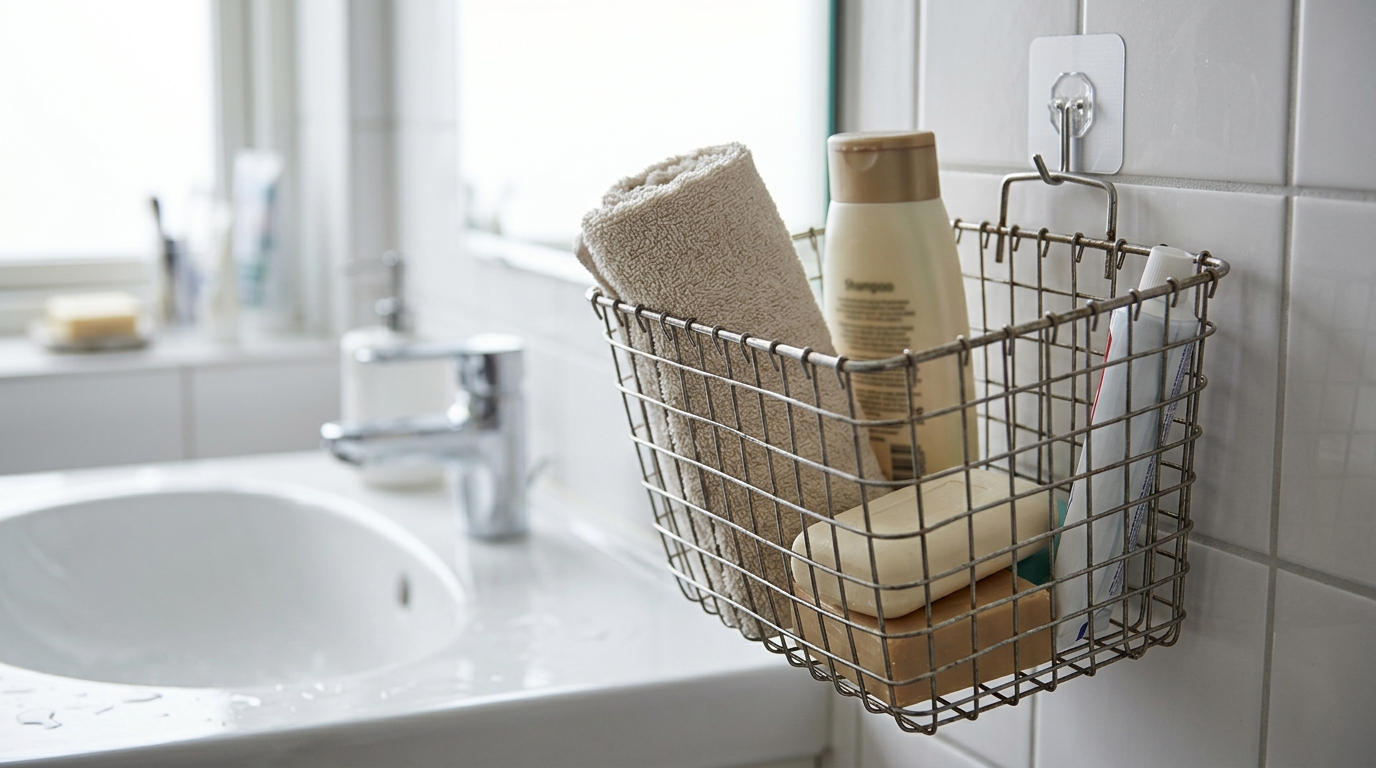
Reuse Containers Before Buying Organizers
Clean glass jars can hold cotton swabs, toothbrushes, or makeup brushes, while labeled shoe boxes work well inside cabinets. Measure the shelf depth and height before choosing containers so doors close properly and vertical space is not wasted.
Featured in this guide
Smart Storage Solutions for a Tidy Bathroom: 3-in-1 Bundle for Organizing Bathroom Storage
Choose Low-Cost Vertical Storage
When existing containers are not enough, adhesive hooks, stackable bins, and over-the-door organizers are inexpensive options. Check each product’s weight rating and confirm that adhesives are compatible with tile, painted walls, or cabinet finishes before installation.
Get More Value From Multipurpose Products
A coordinated bundle can cost less than purchasing several mismatched organizers individually. Look for products that serve multiple functions, such as holding toiletries, towels, and cleaning supplies, and compare the total capacity rather than the price of one piece.
For practical ideas designed specifically for compact bathrooms, explore this guide to a smart bathroom storage and organization bundle.

Watch · product page video
“The step-by-step guides are amazing, especially loved ‘From Mess to Magic’ checklist!”
Stellargoodsboutique product page · Product review
FAQ
What is the least expensive storage?
The least expensive storage is space you already have, organized with reused boxes, jars, or baskets. Decluttering first also reduces how many containers you need.
What is the cheapest way for storage?
The cheapest way for storage is to sort possessions, keep only useful items, and maximize shelves, doors, and wall space. Repurposed containers typically cost nothing.
What is the cheapest way to store things?
The cheapest way to store things is to group similar items in labeled containers you already own. If you must buy supplies, basic plastic bins and adhesive hooks are usually economical.
What are the cheapest data storage solutions available?
The cheapest data storage solutions include free cloud-storage tiers, existing computer drives, and low-cost external hard drives. Compare cost per gigabyte, backup features, and security before choosing one.
Which is the cheapest storage company?
The cheapest storage company varies by location, unit size, availability, and introductory promotions. Compare the full monthly price, insurance, deposits, access fees, and future rate increases.
Which storage units don’t raise prices?
Storage units with fixed-rate contracts or written price guarantees are less likely to raise prices during the stated term. Ask the operator to document the rate-lock period and renewal terms before signing.
See if Smart Storage Solutions for a Tidy Bathroom: 3-in-1 Bundle for Organizing Bathroom Storage fits your setup









Leave a comment